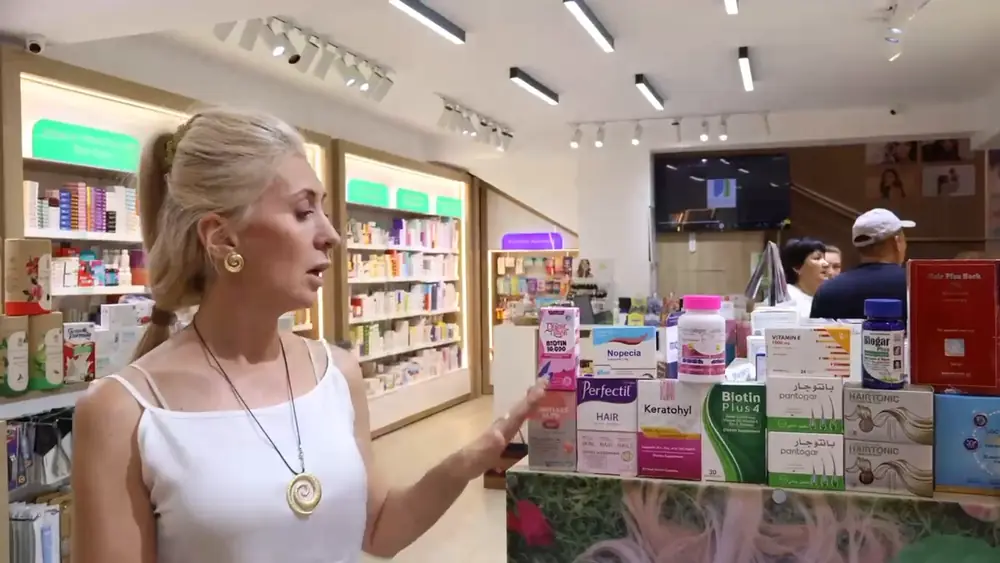

The most useful things to buy at a pharmacy in Egypt are sun protection and oral rehydration salts. Add a few basics for stomach upsets and allergies, and simple first-aid items. Buy what fits your trip, and ask the pharmacist when you are not sure.
This checklist is for holidaymakers in Sharm El Sheikh. Our pharmacists speak English, Russian, Ukrainian and Italian. Our 5 pharmacies across Sharm sell registered medicines at the official prices set in Egypt.
Your Egypt pharmacy checklist
Brand names in the table are examples we carry, so ask us what is in stock today.
| Need | What to ask for | Good to know |
|---|---|---|
| Sun protection | Sunscreen SPF 30 or higher with UVA protection, such as Disaar SPF 50+; lip balm with SPF | Reapply every 2 hours and straight after swimming |
| After-sun care | Aloe vera gel or a soothing after-sun lotion | Cool the skin with water first |
| Rehydration | Oral rehydration salts (ORS) | Mix with bottled water exactly as the pack says |
| Stomach upset | ORS first, then ask the pharmacist | No medicine to stop diarrhoea for children under 12 |
| Allergies and bites | An antihistamine such as loratadine (Claritine); an anti-itch cream | Mention pregnancy and other medicines |
| Travel sickness | Tablets or other remedies from the pharmacist | Some cause drowsiness |
| Throat and nose | Throat lozenges; a sea-water nasal spray such as Beegu | Use decongestant sprays only for a few days, as the leaflet says |
| First aid | Waterproof plasters, sterile dressings, antiseptic wipes, tweezers, a digital thermometer | Rinse cuts with bottled water first |
| Eyes and ears | Lubricating eye drops; advice on ear care | No cotton buds inside the ear |
| Children | Child-strength pain and fever medicine with a measuring syringe; Otrivin Baby saline drops | Never give aspirin to children under 16 |
| Gifts | Lotus natural oils, Emami 7 Oils, CeraVe, Eva Skin Clinic | Patch test before first use |
Sun protection and after-sun care
The NHS advises extra care in a hot country, and when you only get strong sun on holiday. Choose a sunscreen with at least SPF 30 and good UVA protection, and use plenty of it.
Reapply every 2 hours. Also reapply straight after swimming or towel drying, even if the label says water-resistant.
Wear a wide-brimmed hat and sunglasses too, and stay in the shade when the sun is strongest.
If you do burn, cool the skin with cool water, then use a soothing after-sun such as aloe vera. Get medical help if you feel unwell, or if the skin swells badly or blisters. Our guide on how to treat sunburn explains the next steps.
Rehydration salts and stomach upsets
With diarrhoea or vomiting, the most important thing is to drink plenty of fluids. Oral rehydration salts replace the water and salts your body loses. Mix them with bottled water, exactly as the pack says.
Avoid fruit juice and fizzy drinks, because they can make diarrhoea worse. Do not give children under 12 medicine to stop diarrhoea. Ask the pharmacist before you take any diarrhoea medicine, especially if you are pregnant.
Tap water in Egypt is not safe to drink.
Allergies, insect bites and air-conditioning
For an itchy bite, wash the skin with soap and water, then hold a cold, wet cloth on it. An antihistamine can ease itching, and an anti-itch cream can calm itching and swelling. Try not to scratch.
Dry indoor air can make the throat feel rough and scratchy. Changes in temperature or humidity can also cause a blocked or runny nose. Moving between hot streets and cool, air-conditioned rooms is one such change.
A pharmacist can suggest throat lozenges or a salt-water nasal spray. Do not use decongestant nasal sprays for more than a week, because longer use can make the problem worse.
Travel sickness
If boats make you feel sick, sit in the middle of the boat, look at the horizon and get fresh air. Pharmacies sell tablets for travel sickness, including dissolvable tablets for children.
Some of these medicines, such as hyoscine, can cause drowsiness, dizziness or blurred vision. Alcohol can make the drowsiness worse.
First aid, eyes and ears
A small kit helps you manage common minor injuries. Pack waterproof plasters, sterile dressings, antiseptic wipes, tweezers and a digital thermometer. Browse our first-aid products to build your kit.
To clean a small cut, rinse it with bottled water and pat it dry. Then cover it with a plaster or a sterile dressing.
Wind and air-conditioning can dry the eyes, and a pharmacist can suggest lubricating drops. Wear sunglasses, because sunlight reflected from sand and water is particularly harmful to the eyes. A painful red eye, or any change in your sight, needs a doctor.
Water that stays in the ear can lead to swimmer’s ear. After swimming, tilt your head to drain each ear, then dry it with a towel. Do not put cotton buds in the ear, and ask before you use ear-drying drops.
Children’s basics
Pack child-strength medicine for pain, fever and allergy, with a syringe or cup to measure it. Ask the pharmacist to check the product for your child’s age and weight. Never give aspirin to children under 16.
Keep babies under 6 months out of direct strong sunlight. Older children need clothing, shade and at least SPF 30.
If a child with diarrhoea seems dehydrated, has a fever or has blood in their stool, get medical help immediately.
For everyday care, we also stock Johnson’s baby shampoo, and Biovita and Tiny Brainies gummies.
Natural oils and cosmetics to take home
Our shelves include Lotus natural oils: black seed, argan, aloe vera, coconut, jasmine, marjoram and pumpkin seed. We also carry Emami 7 Oils, CeraVe, Eva Skin Clinic and Dr. Rashel. We sell these oils for cosmetic and traditional use on skin and hair, not to treat illness.
Test any new oil or cream first. Apply it to a small patch of skin, such as the inner elbow, twice a day for about a week. An allergic reaction can take several days to appear.
Keep oils away from your eyes. Ask a doctor before using them in pregnancy, or before taking any oil by mouth.
How to ask the pharmacist
Bring the empty box, the leaflet or a clear photo of the pack. The most useful detail is the active ingredient, because brand names often differ between countries. Travel doctors advise listing your medicines by generic name, not brand name.
For example, Adol is a brand of paracetamol here, and Claritine is a brand of loratadine. If your usual brand is not available, ask us to find a medicine with the same active ingredient.
Tell the pharmacist about allergies, pregnancy or breastfeeding, long-term conditions and other medicines. For children, give their age and weight. Egyptian law limits which medicines a pharmacist can give without a doctor’s prescription, so some products need a doctor first.
Keep your receipts
Ask for a receipt every time. Egypt’s Consumer Protection Law says sellers must show prices clearly and give an invoice with the price and the product.
The UK government also advises keeping receipts and medical reports in case you need to claim on travel insurance. Registered medicines in Egypt have official prices set nationally, so read how our official prices work before you shop.
See a doctor urgently if: your lips, tongue or throat swell, or you struggle to breathe; someone has signs of heatstroke, such as hot skin without sweating, confusion or a seizure; there is blood in diarrhoea, or you cannot keep fluids down; a baby under 12 months is unwell; or you have a painful red eye or a sudden change in your sight. In an emergency in Egypt, call 123 for an ambulance.
Need help in Sharm?
Not sure what to buy? Send a photo of the box or your list on WhatsApp, or call +20 120 344 2201. We reply in English, Russian, Ukrainian or Italian, and hotel delivery is free for orders from $30.
FAQ
Questions people ask
Can I buy medicines in Egypt without a prescription?
Egyptian law limits which medicines a pharmacist can give without a doctor's prescription. Everyday items such as sunscreen and plasters are simple to buy, but medicines such as antibiotics should only be used after a doctor's assessment. Bring the box or the active ingredient name, and ask the pharmacist what applies to you.
What should I bring to a pharmacy in Egypt to get the right medicine?
Bring the empty box, the leaflet or a clear photo of the pack. The active ingredient matters most, because brand names often differ between countries. Tell the pharmacist about allergies, pregnancy, long-term conditions and other medicines. For a child, give their age and weight so the pharmacist can check the right product.
What sunscreen should I buy for Sharm El Sheikh?
Choose a sunscreen with at least SPF 30 and good UVA protection, and pick a water-resistant one if you swim. Apply plenty, then reapply every two hours and straight after swimming or towel drying. Add a wide-brimmed hat, sunglasses and shade when the sun is strongest.
Should I keep pharmacy receipts in Egypt?
Yes. Egypt's Consumer Protection Law requires sellers to give an invoice showing the price and the product. The UK government advises keeping receipts and medical reports in case you need to claim on travel insurance. Keep them with your travel documents until you are back home.
Are natural oils from Egyptian pharmacies safe to use?
Oils such as argan or black seed oil are sold for cosmetic skin and hair care, not to treat illness. Test a new oil on a small patch of skin, such as the inner elbow, twice a day for about a week. Keep oils away from your eyes, and ask a doctor before using them in pregnancy or by mouth.
Sources and further reading (20)
- Sunscreen and sun safety — NHS
- Diarrhoea and vomiting — NHS
- Travelers' Diarrhea — CDC Yellow Book 2026
- Travel Health Kits — CDC Yellow Book 2026
- Insect bites and stings — NHS
- Sore throat: symptoms and causes — Mayo Clinic
- Non-allergic rhinitis — NHS
- Motion sickness — NHS
- Hyoscine hydrobromide: medicine for travel sickness — NHS
- Cuts and grazes — NHS
- Dry eyes — NHS
- Preventing Swimmer's Ear — CDC
- Traveling with Children — CDC Travelers' Health
- Heat exhaustion and heatstroke — NHS
- Open application test — DermNet
- Egyptian community pharmacies and self-care: context, challenges and opportunities (Youssef and Amin, 2023) — Exploratory Research in Clinical and Social Pharmacy
- Consumer Protection Law No. 181 of 2018, English translation of selected articles — Official Gazette of Egypt, via Université Paris 1 Panthéon-Sorbonne
- Information for British nationals hospitalised or in need of medical help in Egypt — GOV.UK (FCDO)
- Egypt travel advice — Department of Foreign Affairs, Ireland
- Getting help: Egypt travel advice — GOV.UK (FCDO)
Last updated 8 October 2026. General information, not a diagnosis: always read the leaflet and ask a pharmacist or doctor.

Apteka Sharm
5 pharmacies across Sharm El Sheikh, with pharmacists who speak English, Russian, Ukrainian and Italian. Questions about a product? Ask us on WhatsApp.